The Token Bill Is the New Cloud Bill: When Nobody Owns Consumption
AI seats were a project. Agent loops are an operating cost. An executive model for token fat tails, hard-cap rationing, cost per completed owned outcome, and why platform teams—not a monthly invoice—must own the meter.
Leaders bought seats. Usage charts look healthy. Adoption slides say the program is working.
Then finance opens a consumption invoice that looks like the year-two cloud bill: a few people, a few unattended loops, and a number nobody planned.
The anecdotes are different. The cause is the same.
One team has a $30 seat and a $4,000 tail. Another “standardized” onto a cheaper client after the fiscal year closed. A third has a dashboard of tokens and no idea which workflow, which agent, or which outcome produced them.
The wrong question is which model is cheaper this quarter.
The right one is who owns consumption the way a good platform team owns the cloud bill after migration.
This article is the operating sequel to The Day After Migration. That piece is IaaS waste after a cost cliff. This one is a new meter—tokens, reasoning tokens, retries, and agent loops. Measuring AI-Assisted Engineering tells you whether adoption changes delivery economics. It does not tell you how to run the tool bill when the useful people become expensive.

The Meter Changed
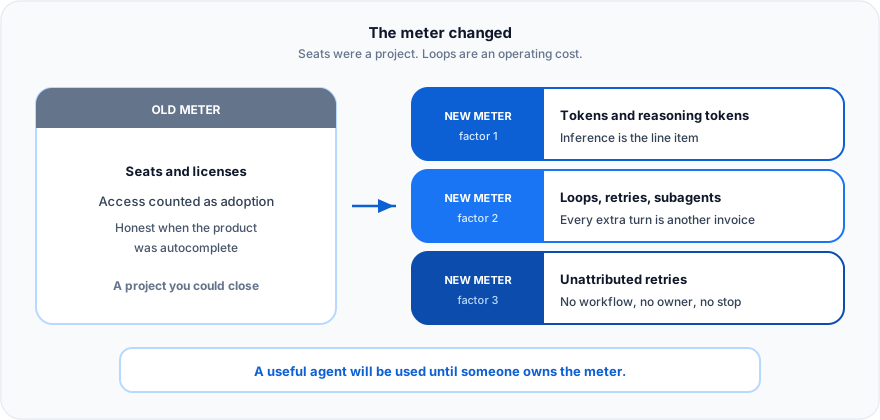
Seats were a project. You bought access, counted licenses, and called it adoption. That meter was honest when the product was autocomplete.
It is not honest now.
An agent that can plan, call tools, retry, and start another loop is an operating cost. Every extra turn is another inference. Every “try again” is another invoice line. A useful agent will be used until someone slams a cap—and a cap without an owned workflow is just rationing judgment.
The industry is already treating this as a bill, not a perk. In June 2026, Gartner described coding-agent spend jumping from tens of dollars per developer per month into the thousands for the heavy tail, with a 2028 forecast that token cost can rival the global-average developer salary. The Linux Foundation’s Tokenomics effort and FOCUS 1.4 put tokens on the same billing object as cloud line items. Vendor control planes are selling “one bill, one policy,” not a smarter model.
Those numbers will move. The shape will not.
The migration dividend trap had a cliff, then creep. The token version has a seat, then a loop. The celebration is the same: a license dashboard that looks like structural change and is not.
Fat Tails, Not Averages
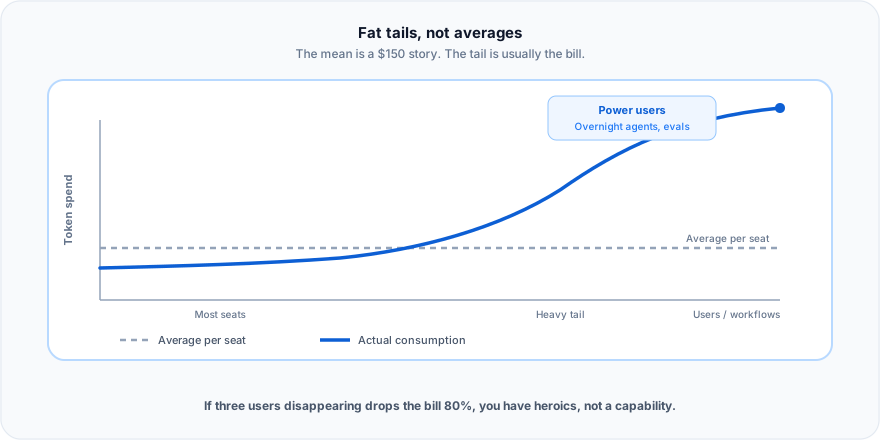
Cloud bills do not explode because everyone over-provisions a little. They explode because a few workloads, a few forgotten environments, and a few Redis clusters nobody sized become the year.
Token bills have the same shape.
Average spend per seat is a comforting lie. The mean is a $150 story. The tail is two staff engineers running overnight agents, an unattended eval suite, and a “background closer” that retries until the ticket is gone. Attribution dies at the interesting part: the tool call, the subagent, the loop that did not belong to a team.
I have seen the Redis version of this enough times to recognize the cousin. The cache was cheap until it was a database. The agent is cheap until it is an unowned worker with a credit card.
Microsoft winding down most Claude Code seats on the Experiences + Devices org and pushing engineers onto Copilot CLI is the enterprise version of a cap. The public story is standardization. The fiscal-year story is consumption. Either way, the organization moved the meter without installing an owner.
If your three heaviest users disappeared and the bill dropped 80 percent, you do not have a capability. You have heroics with a better invoice.
Three Traps
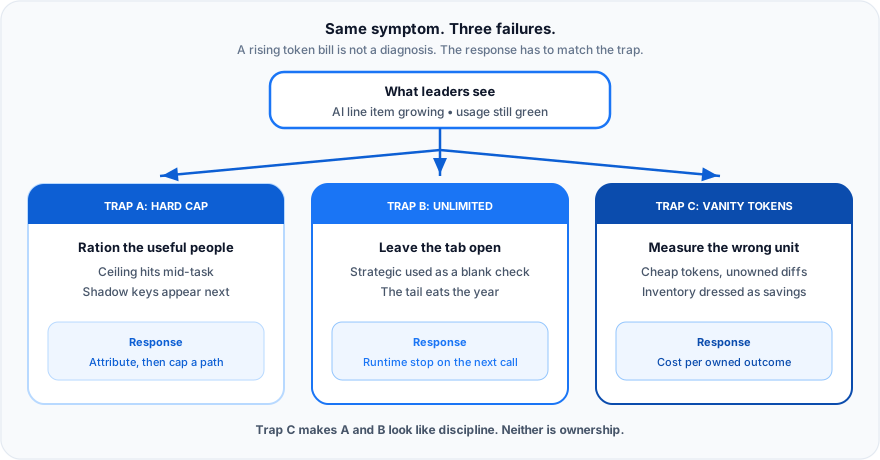
From a distance, leaders see the same thing: the AI line item is growing. The failures are not the same.
Trap A — Hard-cap rationing. Finance slams a monthly ceiling. The people who actually get leverage hit it mid-task. Everyone else still has a green seat. You have rationed judgment, not waste. The next move is shadow keys and personal accounts—the consumption version of agent sprawl.
Trap B — Unlimited because “AI is strategic.” No owner, no attribution, no stop. The tail eats the year. Strategy becomes a synonym for an open tab.
Trap C — Measure tokens, not outcomes. Cheap tokens that produce inventory: unowned diffs, retries nobody asked for, tickets closed by a loop that did not change the customer result. You optimized the unit price of the wrong unit.
A and B need opposite responses. C makes both worse. A cap on vanity tokens looks like discipline. An unlimited budget for unowned loops looks like investment. Neither is ownership.
Cost Per Completed Owned Outcome
Give this model one slide.
The instrument is not cost per million tokens. It is cost per completed owned outcome:
- a merged change that stays
- a resolved ticket with a named owner
- a migration step that did not bounce
- a customer result someone will still stand behind
Tokens are an input. Loops are an input. Seat count is an input. None of them tell you whether the spend bought something the organization can absorb.
Inputs for the monthly review:
- Spend by workflow, team, and tenant—not by vendor logo
- Loop depth and retry rate on the expensive paths
- Share of spend with no attribution
- Cost per completed owned outcome
- Absorption: can review and product still own what generation produces? That pairing is the one-line sequel to the review bottleneck. Do not buy more generation than the contract owners can stand behind.
Dashboards and monthly provider caps are observability. Control is a runtime stop on the next call, attributed to a workflow, judged against an outcome. If finance cannot close the books on agent runs the way they close cloud, the platform is unfinished.
A cheaper model that produces three times the retries is not cheaper. A more expensive model that finishes in one owned pass can be.
Platform Owns the Meter
The most common organizational mistake is the same one I described after migration: stand up a function whose job is to look at numbers.
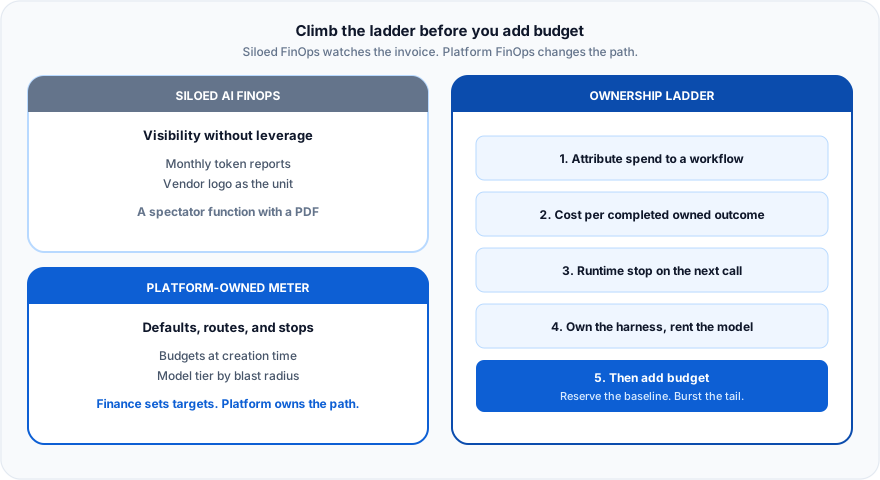
Siloed AI FinOps publishes a token report. Engineering treats spend as somebody else’s concern until finance escalates. There is visibility without leverage.
Cost discipline sticks when it is built into the paved path—the same operating model that already governs how teams deploy, scale, and consume infrastructure.
- Budgets at creation time. A workflow gets a ceiling, a model tier, and a loop-depth limit when it is born, not when the invoice arrives.
- Routing is a platform product. Cheap models for mechanical work. Expensive models for the paths that change money, auth, or customer-visible behavior. That is how workflow, not vendor, becomes a bill, not a slogan.
- The harness is what you own. Skills, specs, sensors, and gates make an agent repeatable by someone other than the rare engineer who can both communicate the work clearly and still hold a wide picture of the system. If that layer lives only inside one vendor’s product, you rented the meter. Own your destiny still holds: if planning and execution are both rented, you have a very expensive contractor with a credit card.
- Guardrails beat gatekeeping. Sensible defaults—max retries, sandbox network allowlists, no unattended closers on write paths—are baked in. Exceptions require justification.
- Finance is a partner, not the owner. Finance sets targets. Platform engineering owns the mechanisms that keep spend aligned with those targets.
If no engineer’s job includes saying no to an expensive default loop, the default wins.
An Operating Model That Is Not a Spreadsheet
You do not need a new steering group. You need a few durable habits.
Name the consumption owner. A person who can change a default, a route, or a stop—not a committee that reviews a PDF.
Attribute before you cap. A cap on an unattributed pool punishes the wrong work. Tag the workflow, the team, and the outcome first. Then the cap has a target.
Reserve a baseline, burst the tail. The same reserved-instance logic you already know: commit the 24/7 paths you can defend, pay on-demand for spikes. Do not buy a year of the most expensive model because a demo was good on a Thursday.
Stop the next call, not the month. A monthly surprise is a postmortem. A runtime stop is an operating system. When the error budget for spend is burned, the agent goes back to draft.
Pair spend with absorption. Tokens can buy production. They cannot buy a person who will still be accountable in Q3. If generation outruns the people who can own the contract, you have purchased inventory.
Kill zombie loops. An eval suite, a closer, or a nightly agent that no longer maps to an owned outcome is the new idle environment. Put it on a kill list.
In Technical Due Diligence for Acquirers and Boards, a fat AI bill with no attribution and no named owner is not a productivity asset. It is integration risk with a better story.
Executive Tests
Stop asking whether the team is “using AI enough.” Ask these instead.
If your three heaviest users took leave, would the bill collapse and the capability disappear with them?
Can finance close the books on agent runs the way they close cloud—by workflow, not by vendor logo?
What happens when someone hits the cap mid-task? Do they stop, degrade, or go around you?
Do you know cost per completed owned outcome, or only tokens and seats?
If the model got 40 percent cheaper tomorrow, would you capture it—or is the meter trapped inside one client?
Are you buying more generation than the people who can still own the contract can absorb?
These tests also matter in a fractional leadership engagement: install the owner and the stop before you scale the tab.
What Not to Do
The failure modes are predictable.
- Treat seat adoption as proof the economics work. Access is not a bill you can defend.
- Slam a hard cap on an unattributed pool. That is Trap A. You will ration the people who were getting leverage.
- Leave the tab open because AI is strategic. That is Trap B. Strategy is not an unlimited SKU.
- Optimize cost per million tokens while unowned outcomes rise. That is Trap C.
- Stand up a reporting function that cannot change a default. Siloed FinOps watches the invoice. Platform FinOps changes the path that creates it.
- Standardize onto one vendor to “control spend” without owning the harness. You moved the logo. You did not move the meter.
- Buy more seats—or more tokens—to clear a review queue. Linear spend against unowned generation is the same mistake as hiring reviewers to absorb undifferentiated volume.
- Cite last quarter’s unit price as the plan. Prices move. Ownership is the plan.
Conclusion
You do not have an AI productivity problem. You have an unowned-meter problem dressed as innovation.
The winners will not be the teams that generate the most. They will be the teams that can tell which loops bought an owned outcome, stop the next call when they did not, and keep the model swappable when the price list changes.
Seats were a project. Consumption is an operating system. Own the meter the way you learned to own the cloud bill—or finance will own it for you, with a cap.
This is the companion to the ownership argument in Skin in the Runtime: the same executive test the book applies to review capacity and cloud cost, applied to agent spend. If your token bill already has a fat tail and no owner, get in touch.
Token bills climbing, and nobody sure which workflow bought the outcome? Connect with me on LinkedIn to discuss consumption-ownership models that keep the meter honest while the agents keep moving.
Related insights
The Review Bottleneck: When AI Writes Faster Than Humans Can Own the Contract
AI did not remove the human constraint—it moved it from typing to review, and it thinned product ownership of the ask and the outcome. An executive model for review capacity, contract review versus style review, shipping too fast, and when to add gates instead of more senior reviewers.
Cognitive Debt: What Teams Must Still Understand When AI Writes the Middle
Teams do not need to know every implementation detail when AI is a competent middle-layer partner. Cognitive debt is losing the durable high-level model—intent, boundaries, invariants, and failure modes—required to direct that partner and intervene when it is wrong.
The Leadership-Grade Homelab: Why Tech Leaders Need Skin in the Runtime
A production-shaped lab is not a hobby rack—it is deliberate practice that keeps technical judgment calibrated when enterprise stakes are high. Why tech leaders need skin in the runtime.