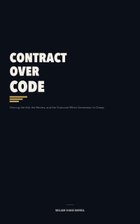
Inside the book
Contract Over Code
The chapter guide, with the insight each chapter grew out of, and one artifact from the book.
As an Amazon Associate I earn from qualifying purchases.
Who this book is for
The leader who owns delivery outcomes. The CTO. The VP of engineering. The director who will be asked in the next planning cycle whether to add seats, add seniors, or just iterate. The senior engineer about to become that director.
It is not a book for the person running the tool rollout. It is not a gate catalog, a prompt-engineering guide, or a talent conversation. You do not need to have read Skin in the Runtime cover to cover. You do need to accept that a green generation dashboard can hide an empty contract layer.
Chapter 1 of Skin in the Runtime named the constraint. This book is the operating model: two contracts, staffed hours on both sides, gates that recover senior time, and a ninety-day install. Every numbered chapter ends with an artifact you can run the same week, with no new tooling.
Chapter guide
Four parts. Twelve chapters. The diagnosis already lives in an insight here. The install is in the book.
The bottleneck split
Chapter 1 of Skin in the Runtime named the constraint: AI-era delivery stalls on review and on ownership of the contract, not on generation. This book does not reprint that chapter. It treats the contract as two contracts — engineering owns the invariant; product owns the ask and the outcome — and asks whether the initiative in front of you has a problem statement or a tool.
Contract versus style
Seniors still line-read as if authorship were the risk. The book splits the ritual: what a senior must still read, the gates that recover their hours, and risk tiers that survive contact with a real queue. A review agent is a filter. It is not a signer.
Capacity as a system
Review is inputs minus leak, not a virtue. The book does the arithmetic: contract-capable hours on both sides, generation rate by risk tier, style leak, unowned-ask leak, and the order of interventions that recover hours before anyone hires a senior. Headcount is the seventh move.
The ninety-day install
Split the queue. Prove absorption. Do not buy more generation than the people who can still own the contract can stand behind. Ninety days tells you whether the queue is a staffing problem, a gating problem, or an ownership problem — and what each costs.
A sample artifact: the problem-statement test
Every numbered chapter closes with something you can use in a meeting. These six questions tell you whether the initiative in front of you has a problem statement or a tool. If a leadership team cannot answer them in one sitting, do not expand seats.
- If we cancelled the tool expansion tomorrow, which delivery number would get worse? If the answer is none — the queue would shrink — you do not have a generation problem.
- Who, by name, can fail a change for an invariant and fail a ship for the wrong product? If either list is empty, the initiative is unowned.
- What share of last month’s reviewer time was style a gate should have killed? If you do not have the sample, you do not have a leak number.
- What share of last month’s ships had a named bar before generation started? If you do not have the sample, you do not have an owned-ask rate.
- Which trap are we in, and what evidence would change the letter? If the room cannot say, the initiative will treat all three with the same hire.
- What are we willing to stop generating until the bar is written? If the answer is nothing — we will iterate — you have already chosen ship-to-keep-up.
The book pairs each question with the page you write when the Review Capacity Audit is over, and with what not to fund when the honest answer is uncomfortable.

Now on Amazon
Skin in the Runtime
Technical Judgment for Leaders in the AI Era
William Shane Burrell
Your engineers are shipping faster than ever. So why do outcomes feel worse? AI moved the constraint from typing to judgment. This book is for CTOs, VPs of engineering, directors, and the senior engineers about to become them.
Kindle $12.99 · Paperback $16.99 · Hardcover $24.99
As an Amazon Associate I earn from qualifying purchases.
Reading it with a team?
Start with copies for the readers and a facilitator guide. If the team wants to work through the first contract after reading, that conversation comes next.